←  Back to Meet Changsha
Star City Relics A Collection of Changsha's Historic Architecture

Star City Relics

A Collection of Changsha's Historic Architecture

Scroll down · explore each one

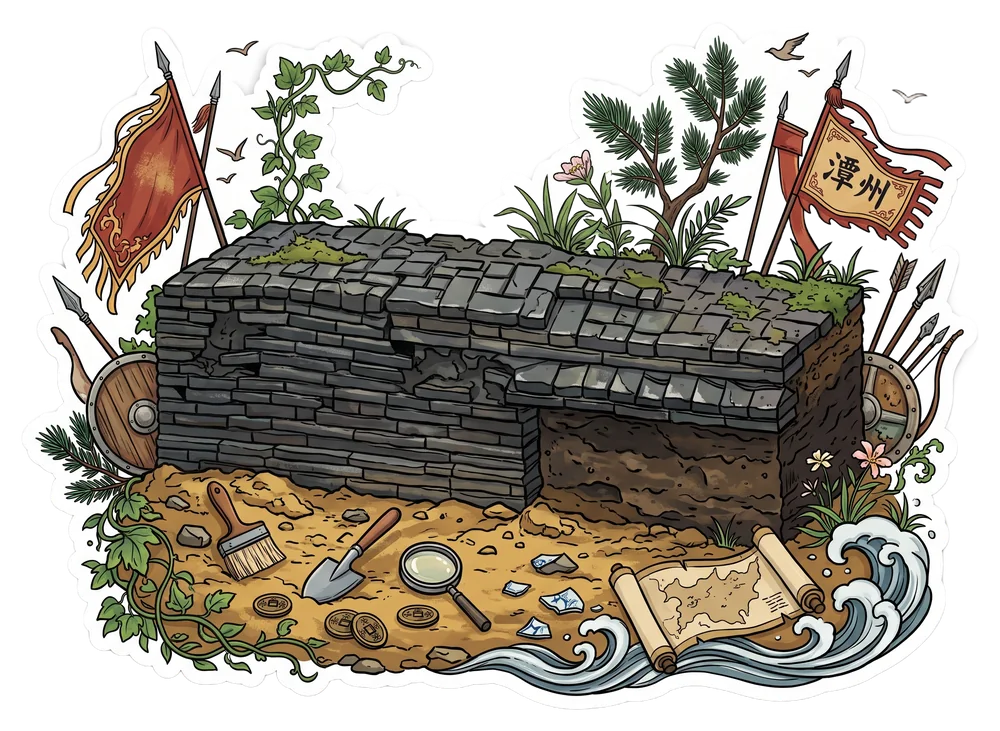
Illustration of the Chaozong Street remains of the Southern Song city wall
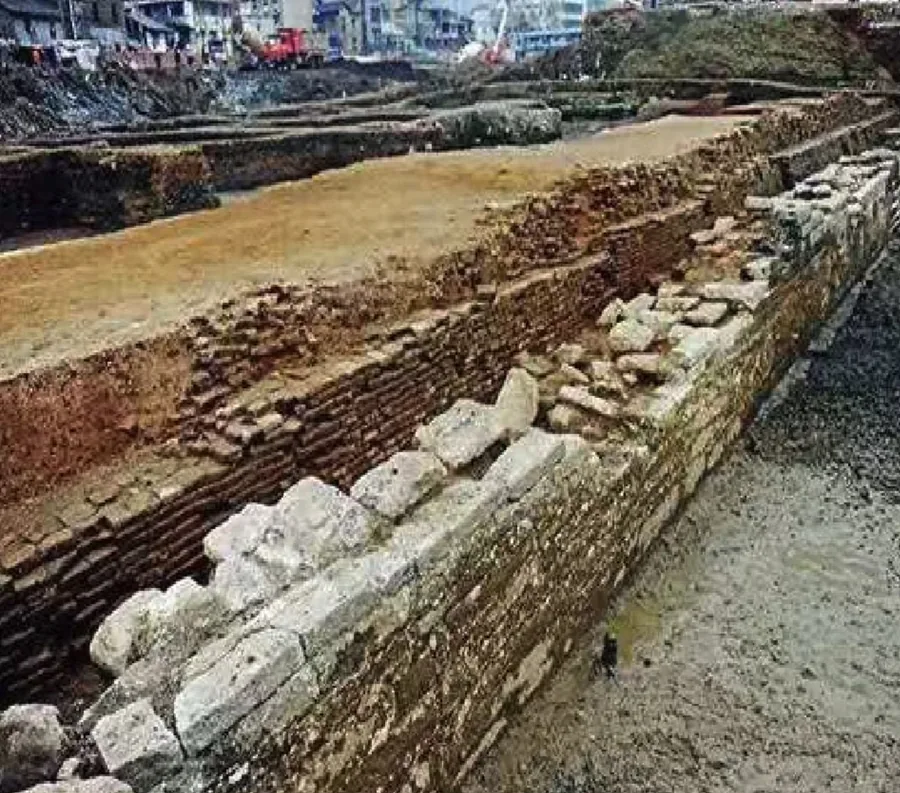
Photograph of the Chaozong Street remains of the Southern Song city wall

Chaozong Street Remains of the Southern Song Wall

Changsha was walled as early as the Warring States period, but the outline of the city we know took shape in the Song dynasty, when the ramparts were built of brick over rammed earth on a grand scale. In 1132, the second year of the Shaoxing era, Li Gang — pacification commissioner of Hunan and prefect of Tanzhou — argued that the city was too large to defend and had the wall cut back by a third, moving the northern rampart to what is now Xiangchun Road. Later dynasties followed that line, fixing the shape of Changsha for centuries. The walls were repaired and strengthened through the Ming and Qing, then largely demolished in the Republican era. Beneath the Wanda complex on Chaozong Street a stretch of about twenty-four metres survives, layered from the Five Dynasties and Ten Kingdoms through the Song, Yuan, Ming and Qing — a rare multi-dynasty accumulation that reads like the growth rings of the city.

Underground car park, Wanda Office Building, Xiangjiang Middle Road, Changsha
Illustration of the Hunan National Products Exhibition Hall
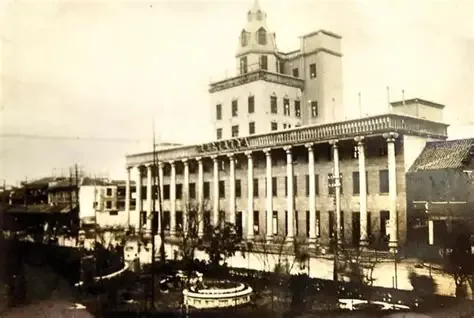
Photograph of the Hunan National Products Exhibition Hall

National Products Exhibition Hall

On Zhongshan Road, between Huangxing Road and Cai'e Road, stands the Hunan National Products Exhibition Hall — the largest surviving Republican-era building in Changsha. In 1928 Liu Tingfang, director of the Hunan Model Industrial Works, proposed its construction; it was designed by Ouyang Shu and built by Zhang Liansheng, opening on 1 October 1932. The reinforced-concrete block carries sixteen Roman columns across its portico, with three main storeys and four more rising above them into a tapering tower; at thirty-two metres it was then the tallest building in the city. From the outset it served a patriotic purpose — Chinese goods must stand on their own — and stocked only domestic products, to a warm public reception. The front block was damaged in the Wenxi Fire of 1938, yet the concrete frame survived, as it did the Japanese air raids that followed. After 1949 it became the Zhongshan Road Department Store, for decades the city's largest commercial landmark. Renovated in 2012 to restore the sixteen columns, it reopened under its original name in 2014.

No. 176 Zhongshan Road, Changsha
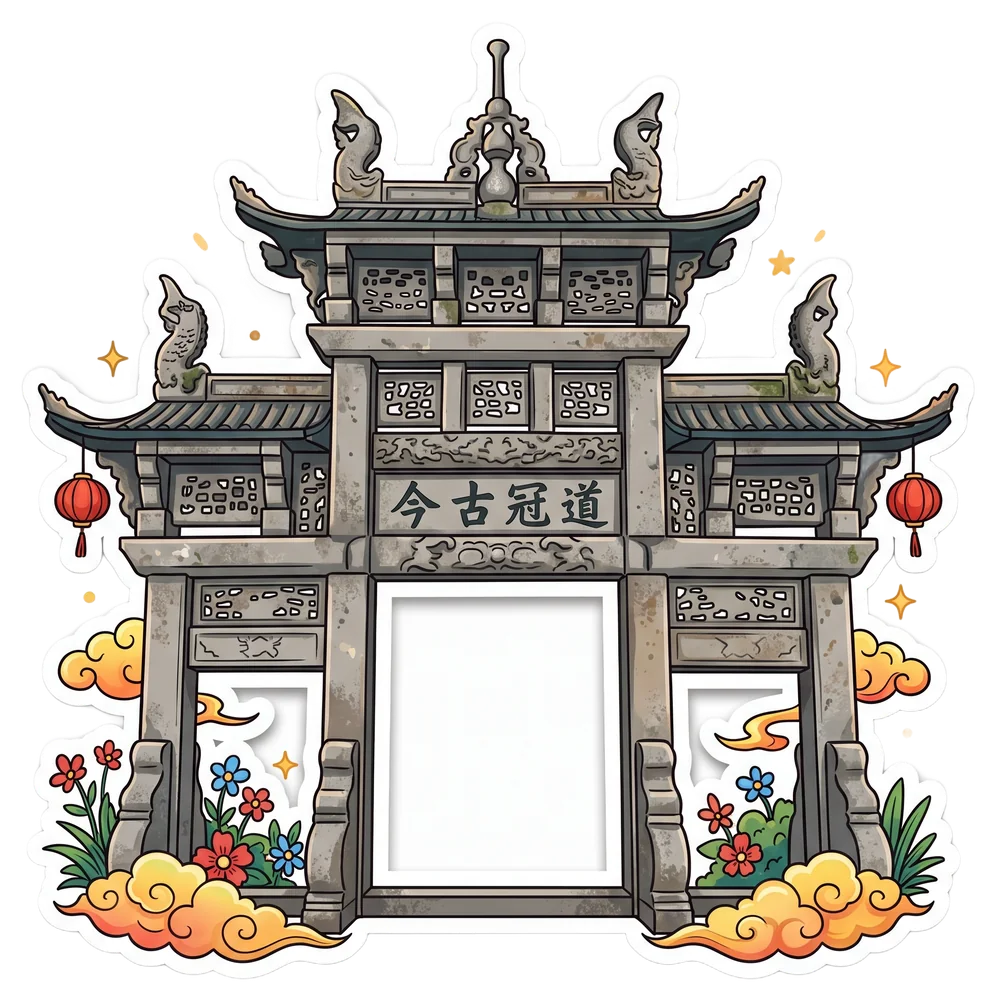
Illustration of the Xiwenmiaoping stone archway
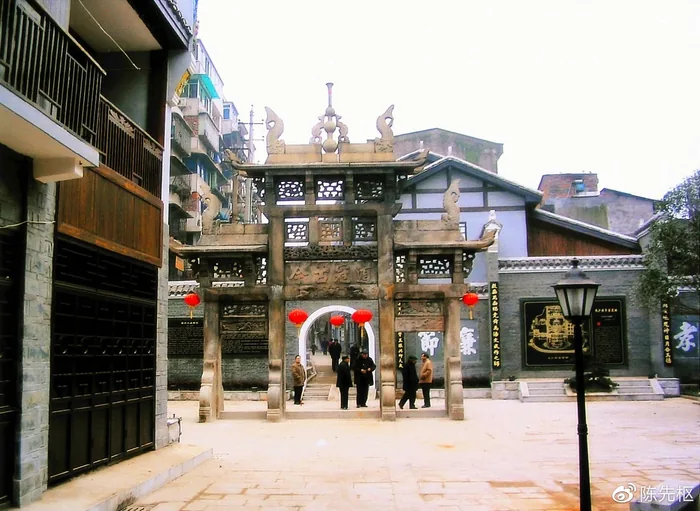
Photograph of the Xiwenmiaoping stone archway

Wenmiaoping Archway

The archway in Xiwenmiaoping Lane, Tianxin District, is the last remnant of the Changsha Prefectural Confucian Academy. The academy was founded in 1064, the first year of the Zhiping era of the Northern Song, and remained the city's highest seat of learning for centuries. The archway itself dates from the Ming; the present one was rebuilt in 1866 by the Hunan governor Li Hanzhang when the academy was repaired. It is a four-pillar, three-bay structure of local granite with double eaves, about nine metres high. The front frieze carries four characters in relief — 'his way crowns past and present' — and the reverse reads 'the gate of worthies'. Dragons, lions, qilin and scrolling grasses are carved across the beams with real finesse. After 1911 the academy was requisitioned, and in 1938 its buildings burned in the Wenxi Fire. Only this archway survived, wedged among ordinary houses, and smoke stains are still visible on the stone. It is the only complete ancient stone archway left in Changsha.

Xiwenmiaoping Lane, Tianxin District, Changsha (between Xialijiapo and Nanqiangwan)
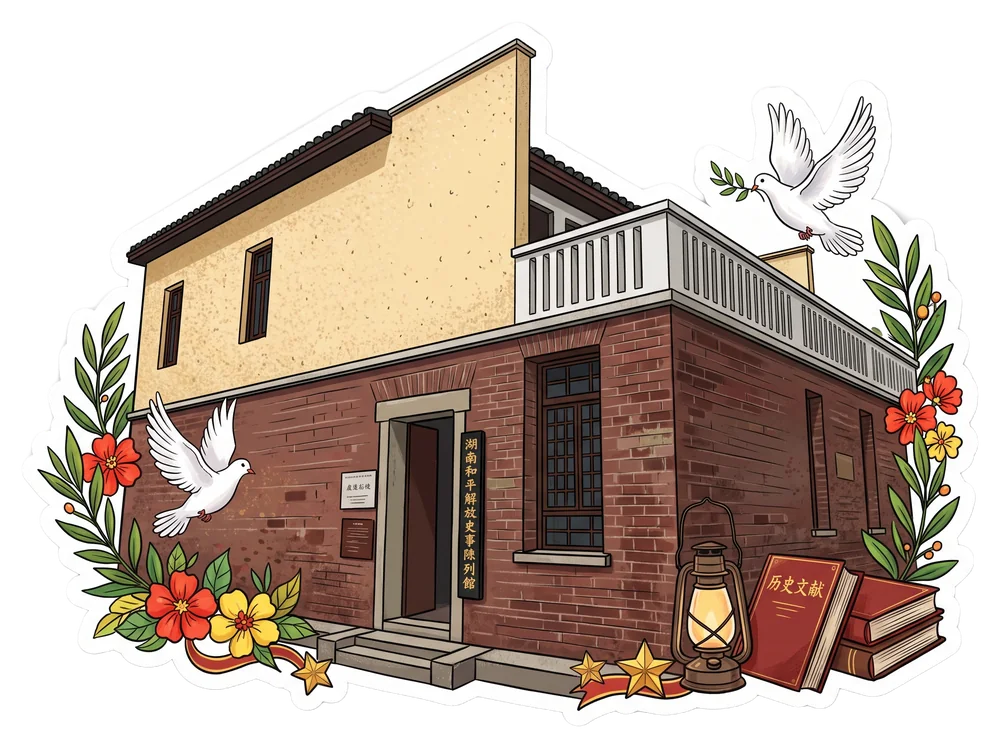
Illustration of Cheng Qian's Mansion
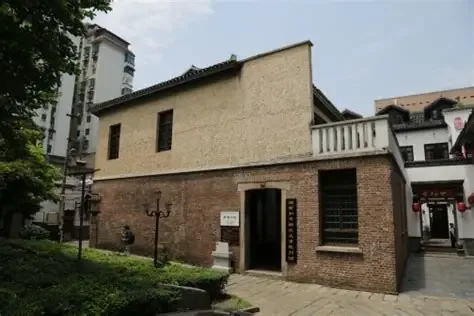
Photograph of Cheng Qian's Mansion

Cheng Qian's Mansion

No. 19 Baiguoyuan, in Furong District, is a two-storey brick-and-timber mansion of the Republican period that blends Chinese and Western forms, with a gatehouse, a main block and an inner courtyard. It covers 214 square metres of ground with 340 square metres of floor space. Cheng Qian lived here while serving as director of the Changsha pacification office and chairman of the Hunan provincial government, and during the peaceful liberation of Hunan it was an important point of contact and negotiation with representatives of the Chinese Communist Party. On 4 August 1949 Cheng Qian and Chen Mingren issued the telegram of uprising from this house, declaring Hunan's peaceful liberation — sparing the province the ravages of war and helping to hasten the liberation of the whole country. In 2015, after rescue conservation, the mansion opened to the public as the Exhibition Hall of the Peaceful Liberation of Hunan, with the history on the ground floor and Cheng Qian's life and work above. In 2019 it was listed as a Major Historical and Cultural Site Protected at the National Level.

No. 19 Baiguoyuan, Furong District, Changsha
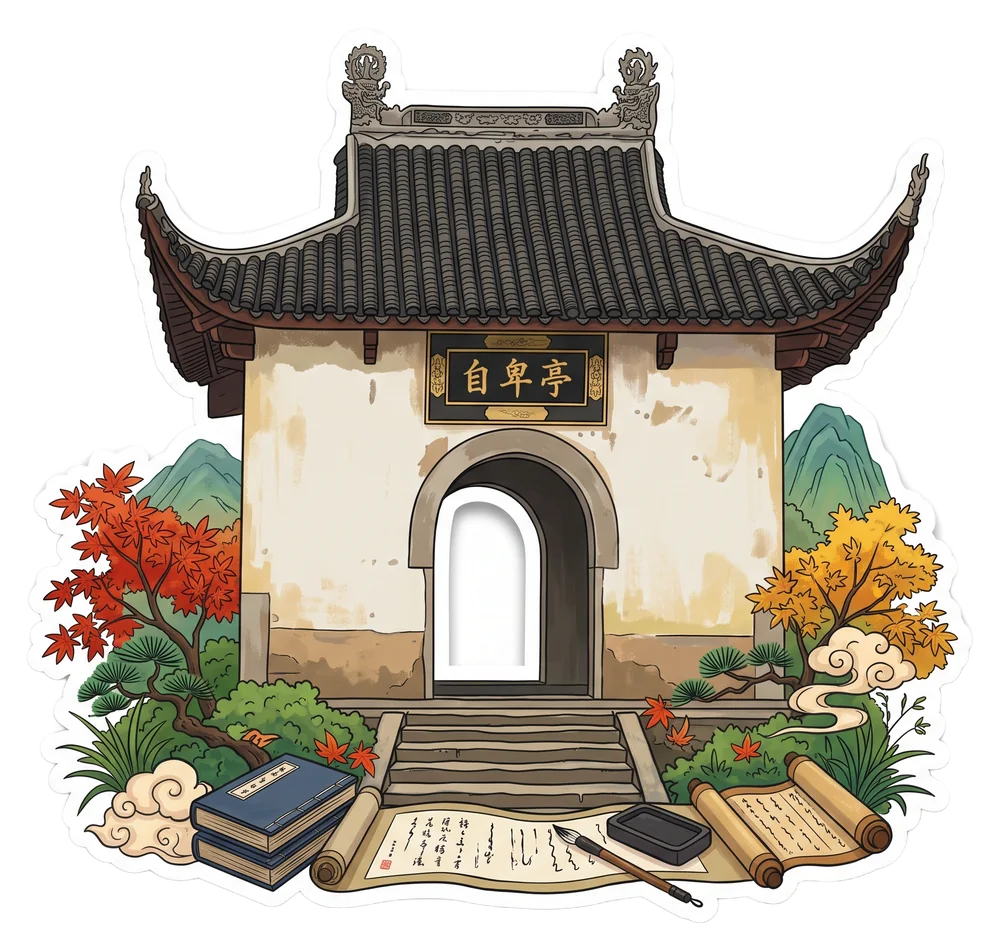
Illustration of Zibei Pavilion
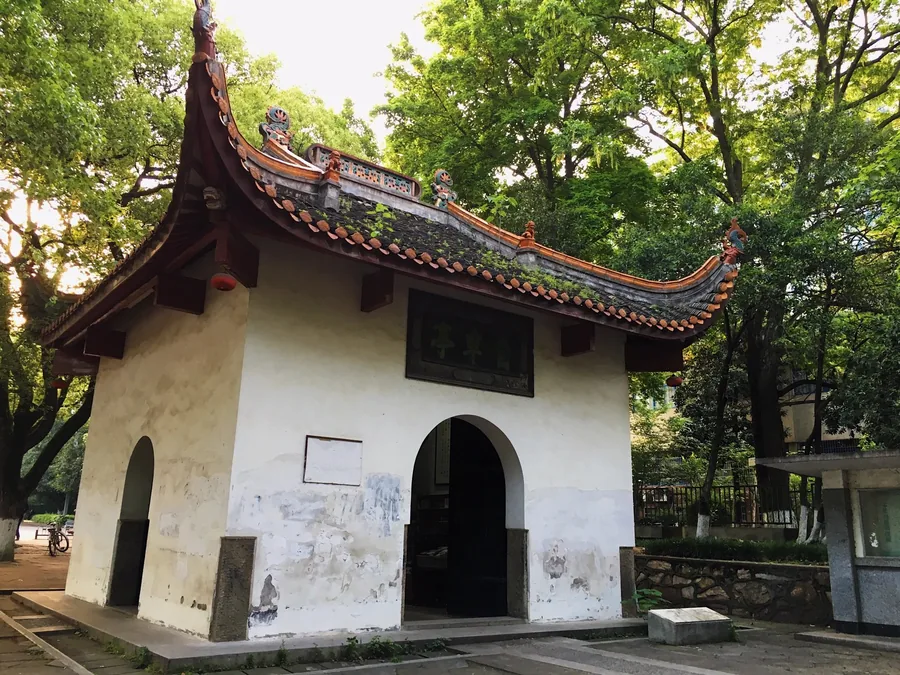
Photograph of Zibei Pavilion

Zibei Pavilion

Zibei Pavilion stands at the north-east corner of what is now Hunan University's square, on the path that once led to Yuelu Academy. In 1688 Zhao Ning, assistant prefect of Changsha, saw that travellers who had crossed the river to study had nowhere to rest, and had the pavilion built beside the road. Its name comes from the Doctrine of the Mean: the way of the gentleman is like a long journey, which must begin from where one stands; like climbing a height, which must begin from the lowest point. It was a reminder that every ascent starts at the bottom. The name was inscribed by Che Wanyu, and successive heads of Yuelu Academy — Ouyang Zhenghuan, Yuan Mingyao and Ding Shanqing among them — repaired the pavilion and left records of their work. The present building is square in plan, of brick and timber, with a single-eaved hip-and-gable roof of grey tiles, white plastered walls and arched openings on all four sides: plain, sturdy and composed.

200 m from the main gate of Yuelu Academy
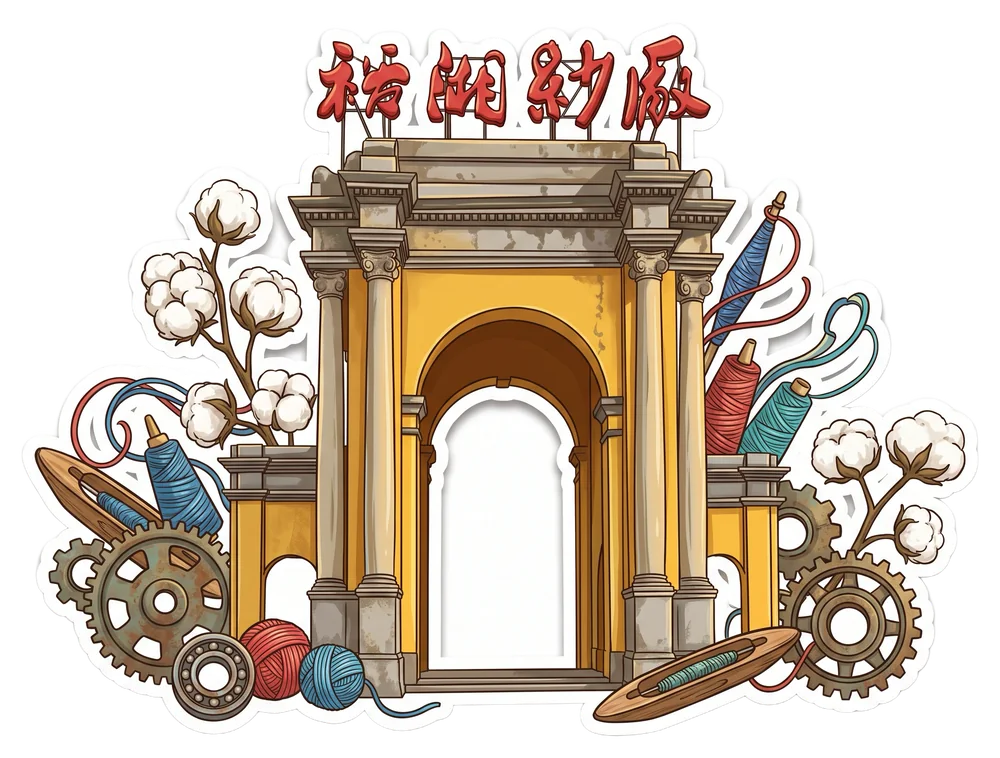
Illustration of Yuxiang Cotton Mill
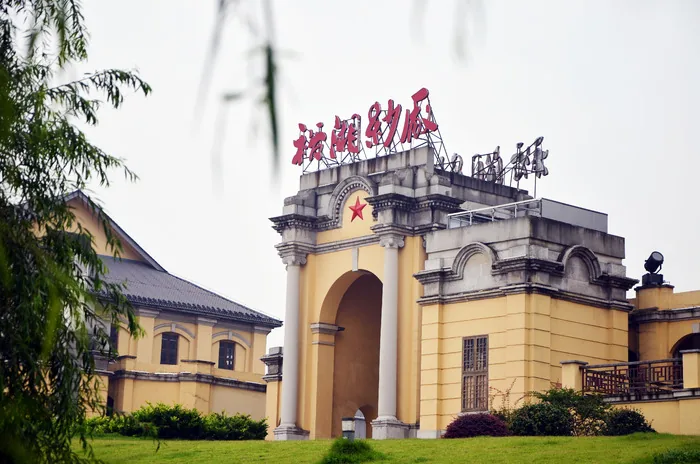
Photograph of Yuxiang Cotton Mill

Yuxiang Cotton Mill

On the bank of the Xiang River at Yinpening, in Yuelu District, stands Yuxiang Cotton Mill — the earliest large machine-spinning mill in Hunan. In 1912, as revolution stirred, Wu Zuolin of the Hunan military government protested the flood of foreign goods and applied to found a mill. First called Jinghua, it was renamed Hunan No. 1 Cotton Mill the following year, and its Junshan and Yuelu yarns sold widely within and beyond the province. The workshops and machinery were destroyed in the Wenxi Fire of 1938; after the war the mill was rebuilt on the same site and renamed Yuxiang, entering its most prosperous years. All that remains today is part of the old wharf complex, about twenty mu in extent, with gatehouse, office block and warehouse ranged in a line: yellow walls over granite dados, European columns and round-arched arcades with a touch of Roman flavour, the gatehouse counted among the country's three great mill gates. It is the only surviving Republican-era industrial relic in Changsha, listed as a provincial heritage site and in China's register of industrial heritage.

Xiaoxiang North Road, Yinpening Street, Yuelu District, Changsha (opposite the Poly West Coast sales centre)
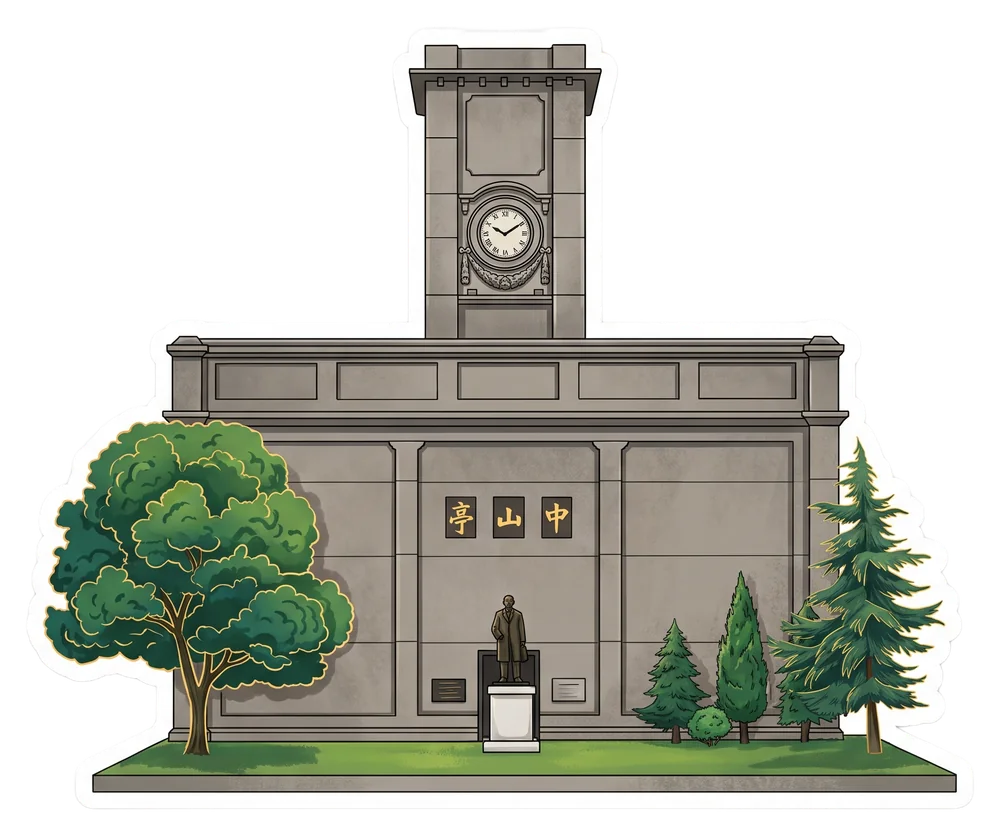
Illustration of Zhongshan Pavilion
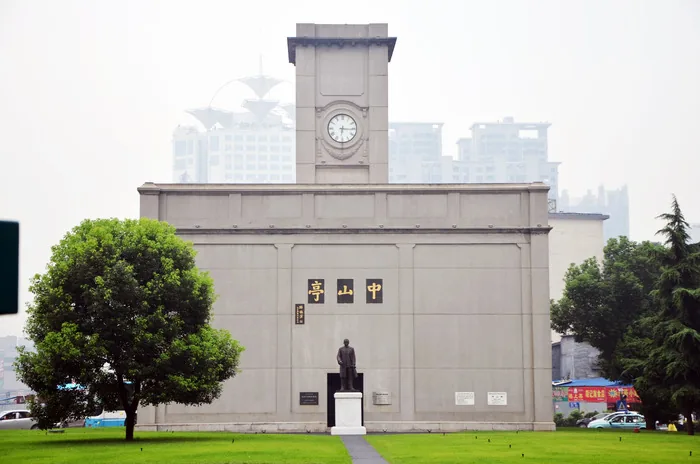
Photograph of Zhongshan Pavilion

Zhongshan Pavilion

Zhongshan Pavilion stands on a green island where Zhongshan Road meets Huangxing Road: a Western-style square clock tower sixteen metres high, its name inscribed by Sun Suifang, granddaughter of Sun Yat-sen. In the Qing dynasty the site held a thick screening wall facing the office of the Hunan governor. When Zhongshan Road was completed in 1930 the wall and the barracks behind it were cleared, a park was laid out and this tower rose at its centre, named in memory of Sun Yat-sen. Changsha then bought the most advanced electric standard clock of the day from Germany — the beginning of public standard time in the city. Zhongshan Pavilion time was for decades the most precise and authoritative reading available, and people could be seen glancing up to set their watches by it. The tower survived the Wenxi Fire of 1938 with its hands stopped at 4:37, marking the hour the city burned, and it stood through the four Battles of Changsha that followed. It has served as a public education hall, a cultural centre and a library; in 2024 the clock was overhauled and its chimes ring out over the busy streets once more.

Junction of Zhongshan Road and Huangxing Road, Kaifu District, Changsha
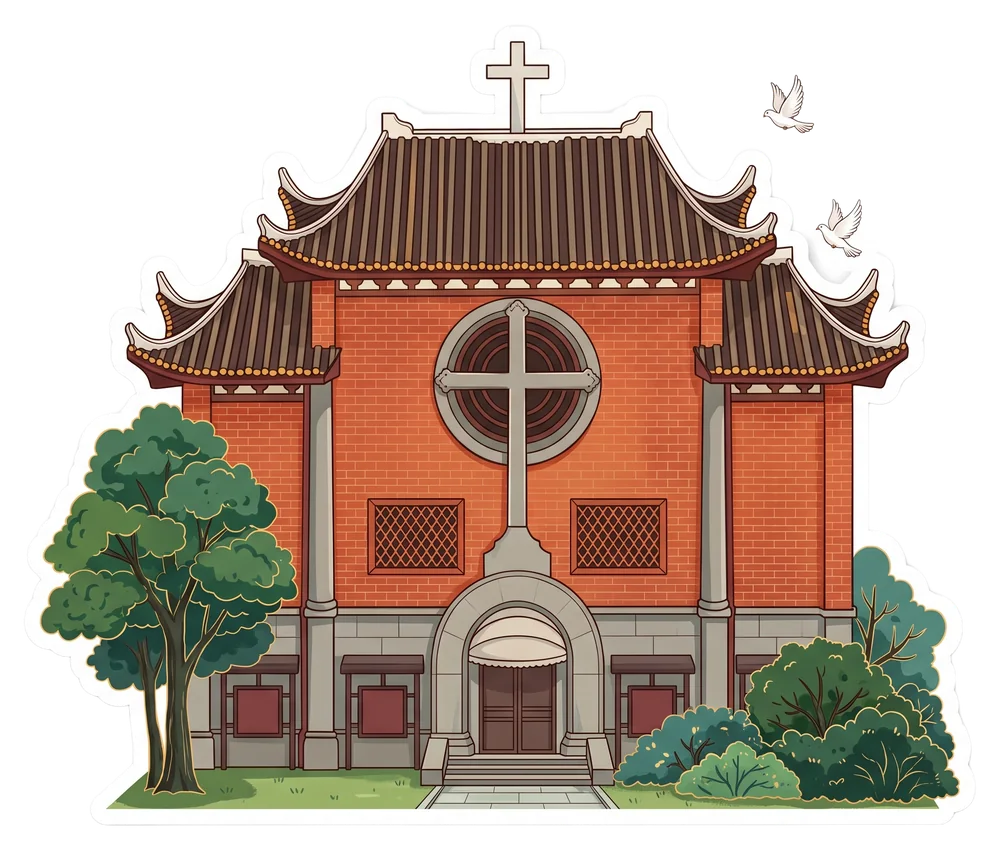
Illustration of Chengbei Christian Church
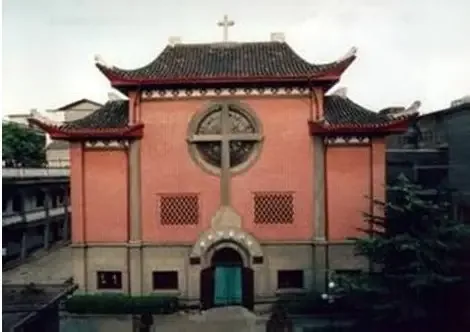
Photograph of Chengbei Christian Church

Chengbei Church

At No. 298 Huangxing North Road, in Kaifu District, stands Chengbei Church — originally Yongren Hall of the Church of Christ in China, and the largest and best-preserved Sino-Western religious building of the modern era in Hunan. The London Missionary Society bought the land in 1902; it passed to the American Presbyterian mission in 1912, and the present building was completed between 1914 and 1917. It is a hybrid of brick and concrete: a three-storey front hall under a hip roof, a two-storey rear hall under a gable-and-hip roof, with upturned eaves and tubular tiles, while inside the ceiling is formed of timber arches into a series of vaults. The plan follows the Latin cross of a Western church, so that Western structure and traditional Chinese roofing meet to unusual effect. It can seat more than five hundred. The Hunan assembly of the Church of Christ in China was founded here in 1947, and services resumed in 1980. It remains the seat of the Changsha Christian Council. In 2002 it was listed as a provincial heritage site.

No. 298 Huangxing North Road (No. 80 Wai Xiangchun Street), Kaifu District, Changsha
Illustration of Tianxin Pavilion
Photograph of Tianxin Pavilion

Tianxin Pavilion

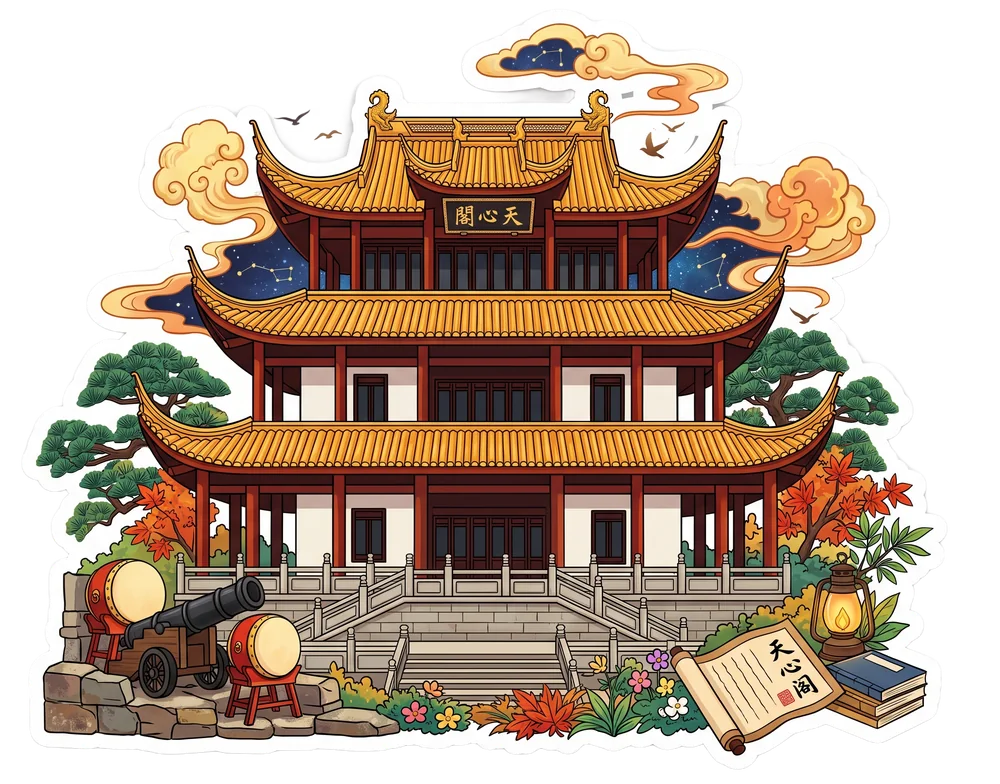
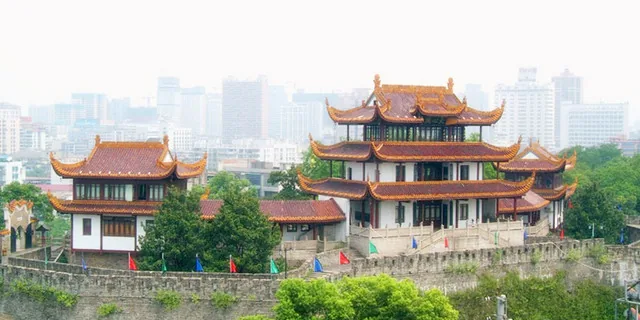
Tianxin Pavilion stands on the old city wall in the south of Changsha, on Tianxin Road, and has been the emblem of the city since Ming and Qing times — the ancient pavilion of Xiaoxiang, the famous city of Qin and Han. Its earliest record goes back to the late Ming; in the Hongwu era the city wall was built under the command of Qiu Guang, and in 1638 the barbican was added and the pavilion strengthened. Pavilion and wall both suffered heavily in the Wenxi Fire of 1938 and in the war years. The present three-storey pavilion, with layered eaves of blue-green tiles and vermilion beams, was rebuilt in 1983 and covers 846 square metres. The wall below it, 251 metres long, 13.4 metres high and 6.1 metres thick at the top, is the only stretch of ancient city wall still standing above ground in the old city, with monuments to the war dead such as Chonglie Gate and Pavilion nearby. Today it is a national 4A-level scenic area, one of China's famous historic pavilions and a Major Historical and Cultural Site Protected at the National Level. At night the pavilion and its wall are lit, and the old fortifications take on quite another character.

No. 17 Tianxin Road, Tianxin District, Changsha (inside Tianxin Park)
Illustration of Tianfu Temple
Photograph of Tianfu Temple

Tianfu Temple

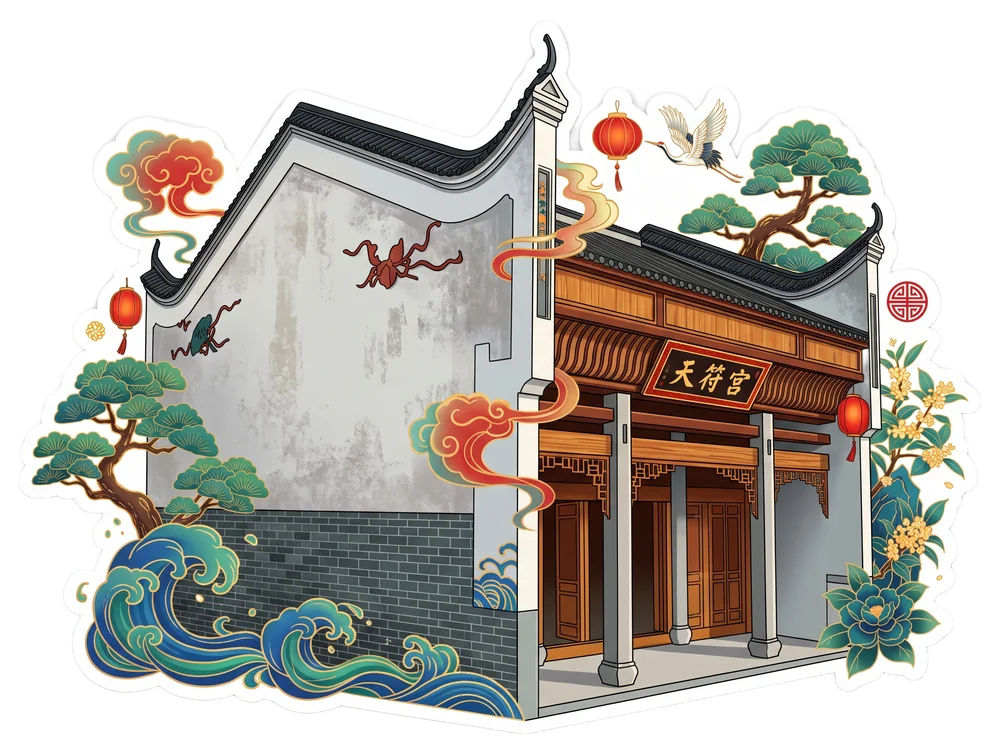
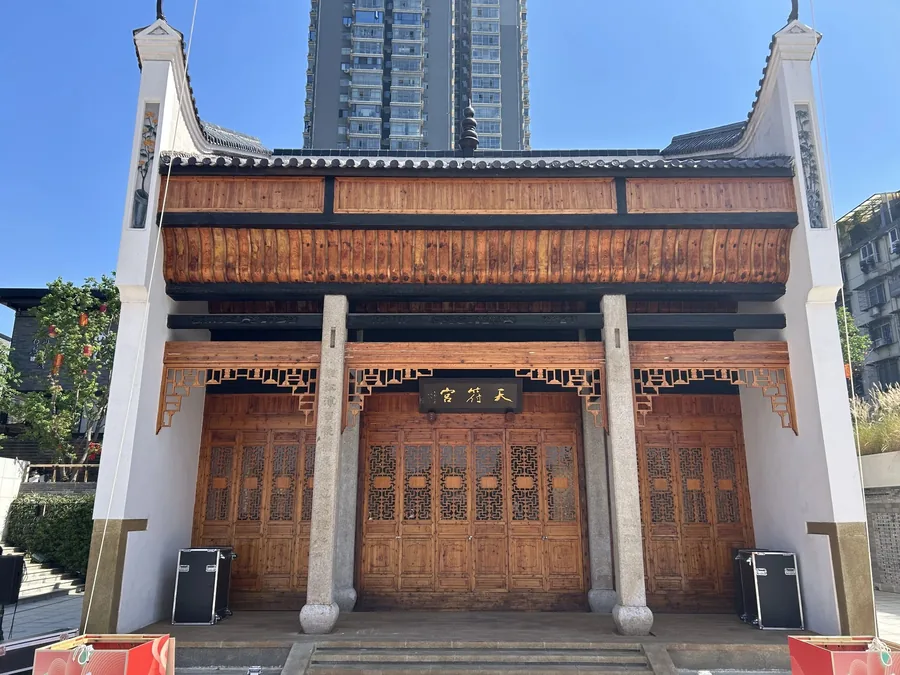
Tianfu Temple, also known as Tianfu Miao, stands on Chuxiang Street in Tianxin District on the east bank of the Xiang River — an important folk temple in the south of the city. It was built in the Guangxu era of the Qing with funds raised by the boatmen of the Xiang River wharves, and dedicated to the Tianfu Emperor who governed plague and its containment; traders and ordinary townspeople came here to pray for safety. Under the Xianfeng emperor a wooden image of the Southern Song loyalist Zhao Ruyu drifted to the temple gate and was retrieved and enshrined by local people, producing an unusual pairing of a protective deity and a moral exemplar. Old Changsha had a saying — Tianfu in the south, Kaifu in the north — and its temple fair ranked with that of Huogong Palace. A stage once stood inside, and after 1949 the temple became an important venue for Xiang opera. It was spared in the Wenxi Fire of 1938 thanks to the efforts of its fire brigade. Long forgotten afterwards, it was rediscovered during the Chuxiang Street redevelopment in 2018, listed as a municipal heritage site in 2022, and reopened in 2026 after conservation in the repair-as-old manner.

Chuxiang Street, Tianxin District, Changsha (near the east bank of the Xiang River)
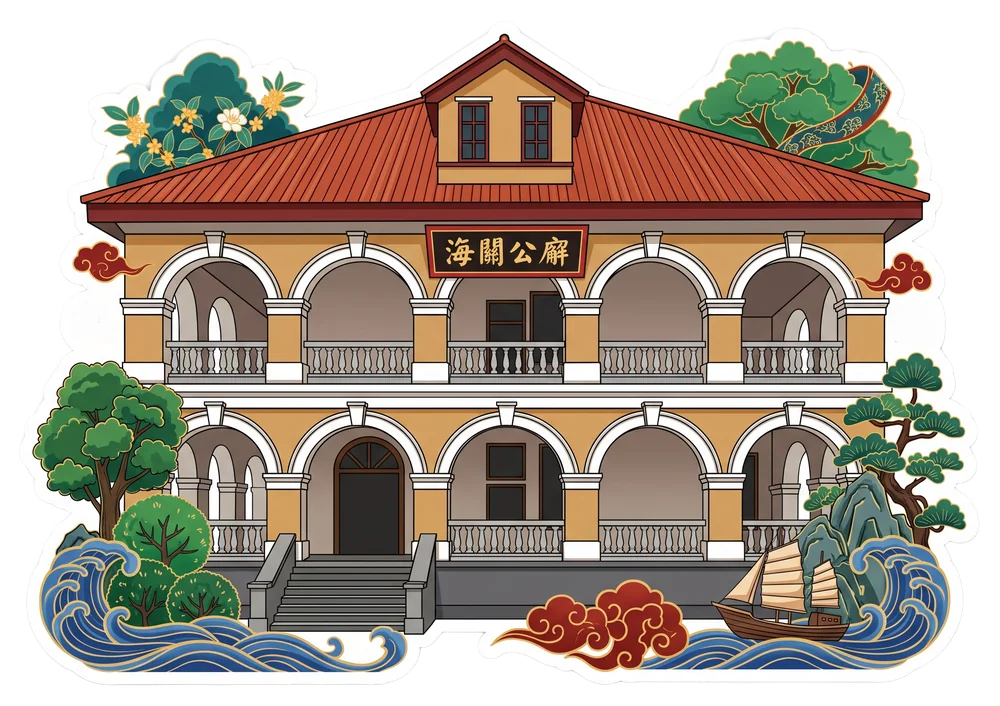
Illustration of the old Changsha Customs House
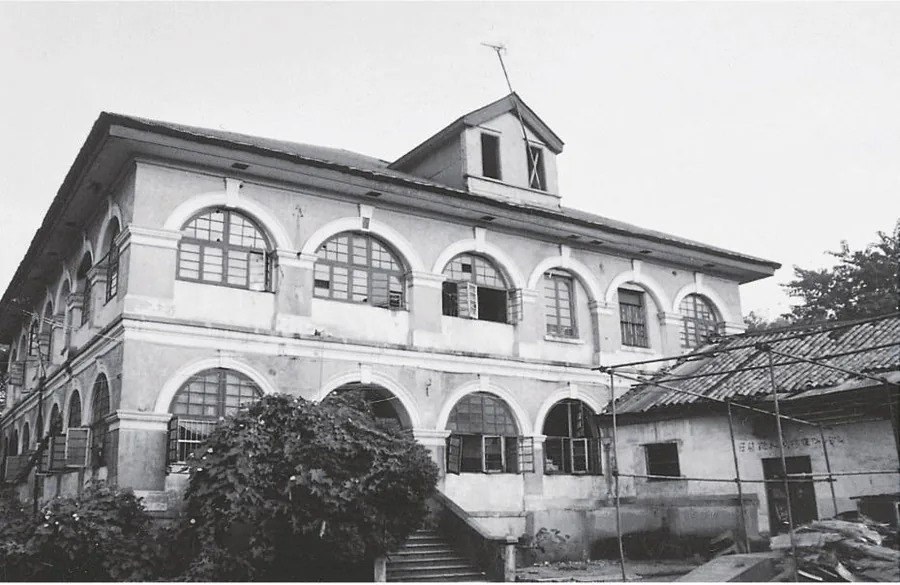
Photograph of the old Changsha Customs House

The Old Customs House

The old Changsha Customs House stands in the middle of Orange Isle, in Yuelu District, beneath the Xiang River bridge, bearing witness to the city's opening as a treaty port. In July 1904 Changsha was declared an open port and customs were formally established. The Qing government first set up at Xiaoximen and then added a new office on Chaozong Street; both were destroyed in the rice riots. In 1911 the customs was rebuilt on Orange Isle — the building that survives today: a two-storey colonial-style block facing east, of brick and timber on a granite base, with linked arched verandas and a roof of green corrugated steel. After the port opened, consulates, trading houses and villas of Britain, the United States and Japan appeared on the island, of which seven sites and eleven buildings remain — which is why the area was once described as Changsha's concession. As the only surviving structure from the city's opening and customs establishment, it is both testimony to a semi-colonial past and a building of real architectural interest. It now houses the Changsha Customs Modern History Museum and is a provincial heritage site.

Central Orange Isle, Yuelu District, Changsha (beneath the Xiang River bridge)
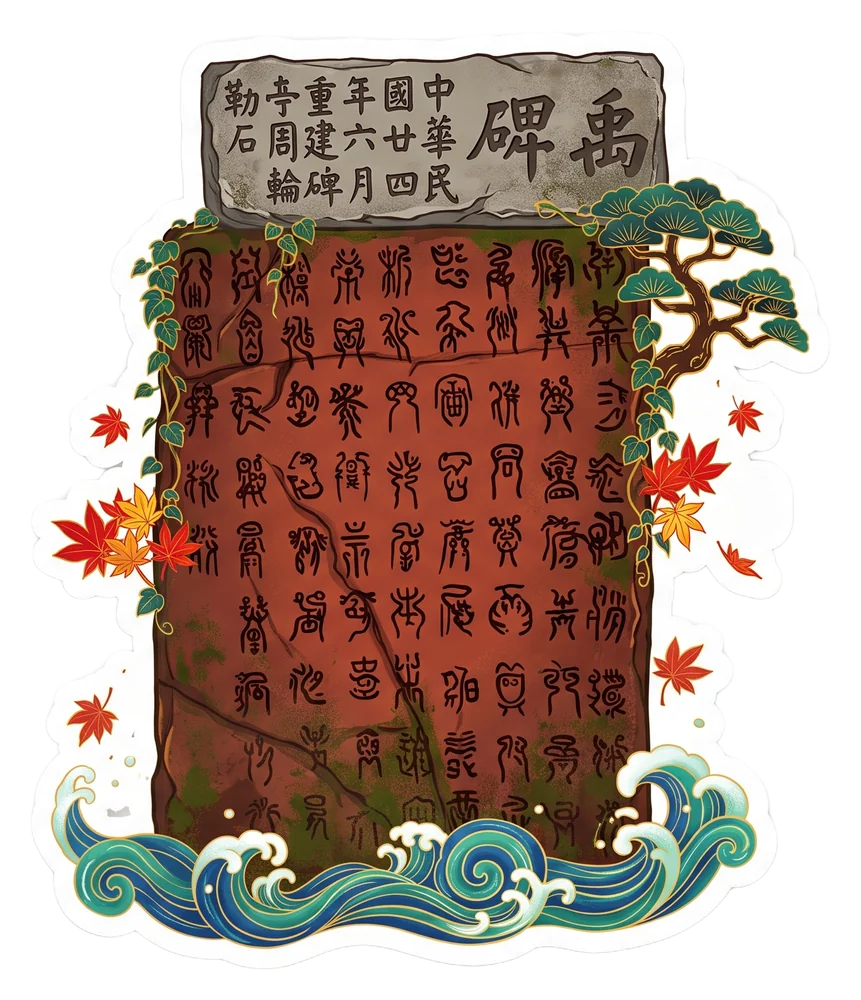
Illustration of the Yu the Great Stele on Yuelu Mountain
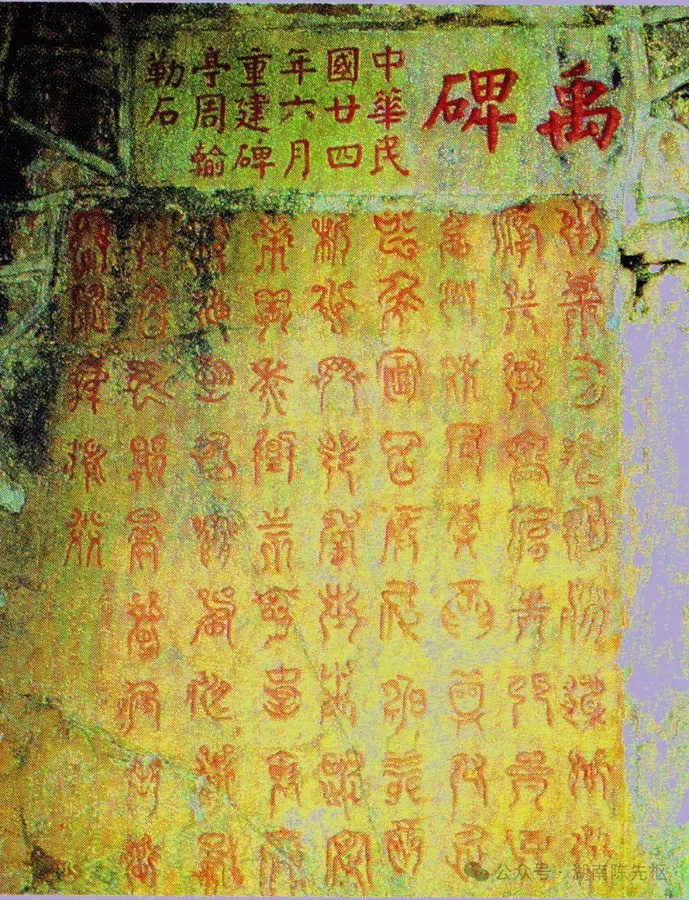
Photograph of the Yu the Great Stele on Yuelu Mountain

Yu the Great Stele

On the rock face to the left of Yunlu Peak on Yuelu Mountain, facing east, stands the Yu the Great Stele — the oldest surviving version of the inscription and, together with the tombs of the Yellow Emperor and the Yan Emperor, counted among the three great treasures of the Chinese nation. The text is said to celebrate Yu's taming of the floods. It originally stood on Mount Heng at Goulou Peak, which is why it is also called the Goulou inscription; the Yuelu version was copied from Mount Heng in 1212, the fifth year of the Jiading era of the Southern Song, and is thus some eight hundred years old. The stone is 1.84 metres high and 1.4 metres wide, carrying nine columns and seventy-seven characters, each about sixteen centimetres square. The forms resemble tadpoles — seal script and yet not seal script — and remain largely undeciphered. Yang Shen and others offered readings in the Ming, but scholars have disagreed ever since: some call it Xia dynasty writing, others a Daoist talisman. It is known as an enduring riddle. Carvings by Liu Runan of the Ming and Ouyang Zhenghuan of the Qing stand beside it. Listed as a provincial heritage site in 1983, it was raised to national protection in 2013.

Yunlu Peak, Yuelu Mountain, Yuelu District, Changsha (rock face on the left of the summit)