Old Banks of Changsha: Banknotes, Warlords and the Road to Sound Money
Before Changsha was famous for crayfish and late nights, it ran an experiment in paper money — through warlord bankruns, empty vaults, and one provincial bank that finally learned the lesson. Three chapters, three kinds of notes.
i. The banks of the early Republic
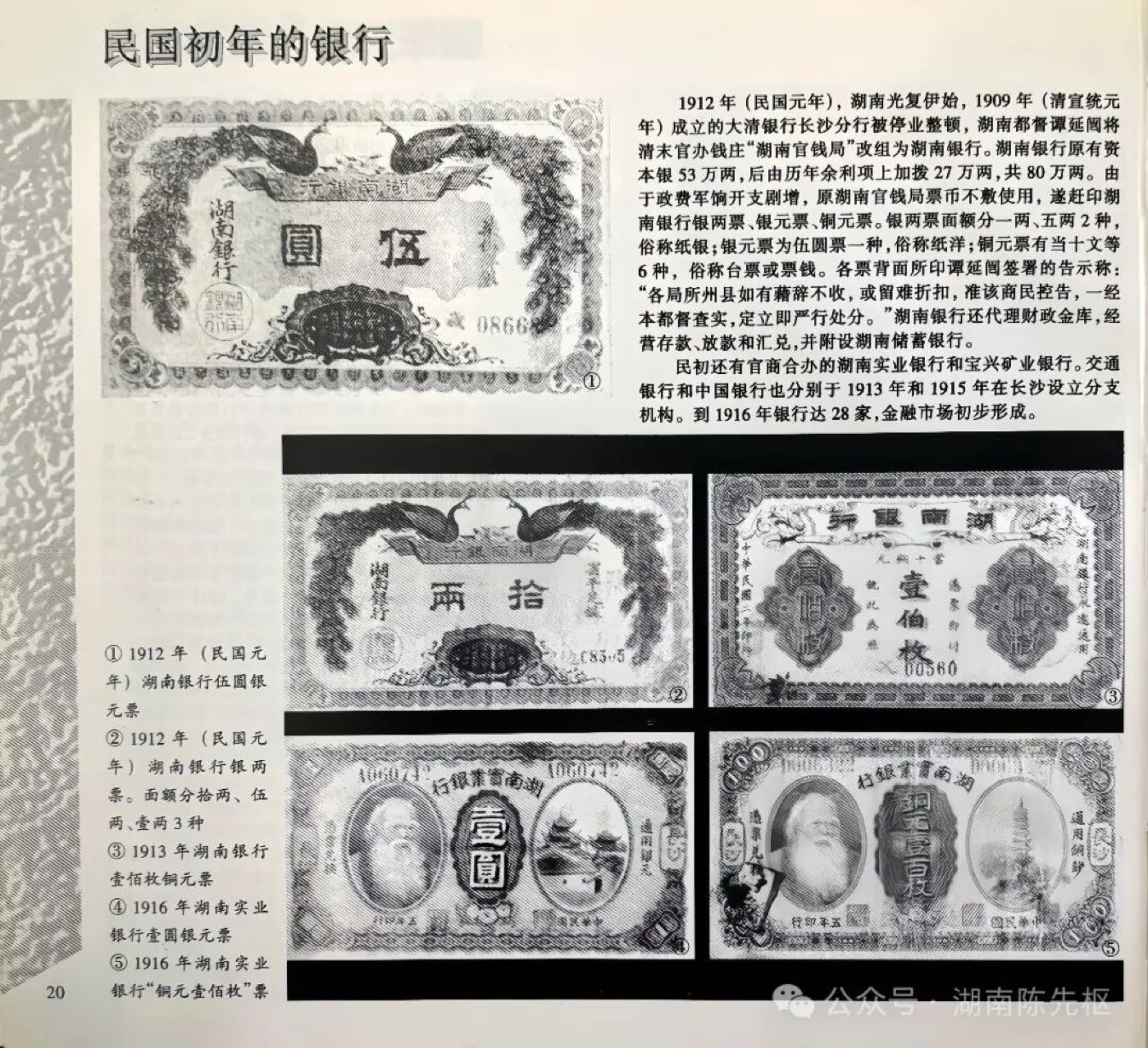
In 1912, the first year of the Republic, Hunan had just thrown off the old empire. The Changsha branch of the Great Qing Bank — opened only three years earlier — was shut down for reorganization, and Governor Tan Yankai reorganized the late-Qing official money house into the new Hunan Bank.
Capitalized at 530,000 taels of silver, later raised to 800,000 from accumulated profits, the bank raced to print notes as government and military expenses ballooned: silver-tael notes in one- and five-tael denominations, silver-dollar notes, and copper-coin notes in six denominations. On the back of every note ran a printed warning signed by Tan himself: any county office that refused the notes, or discounted them under pretext, could be sued by merchants — and once verified, would be "severely punished immediately." The bank also acted as the provincial treasury, took deposits, made loans, handled remittances, and ran a attached savings bank.
Joint official-merchant ventures followed — the Hunan Industrial Bank, the Baoxing Mining Bank — and the Bank of Communications and Bank of China opened Changsha branches in 1913 and 1915. By 1916 the city counted 28 banks, and a financial market had taken shape.
ii. The notorious Yuxiang Bank
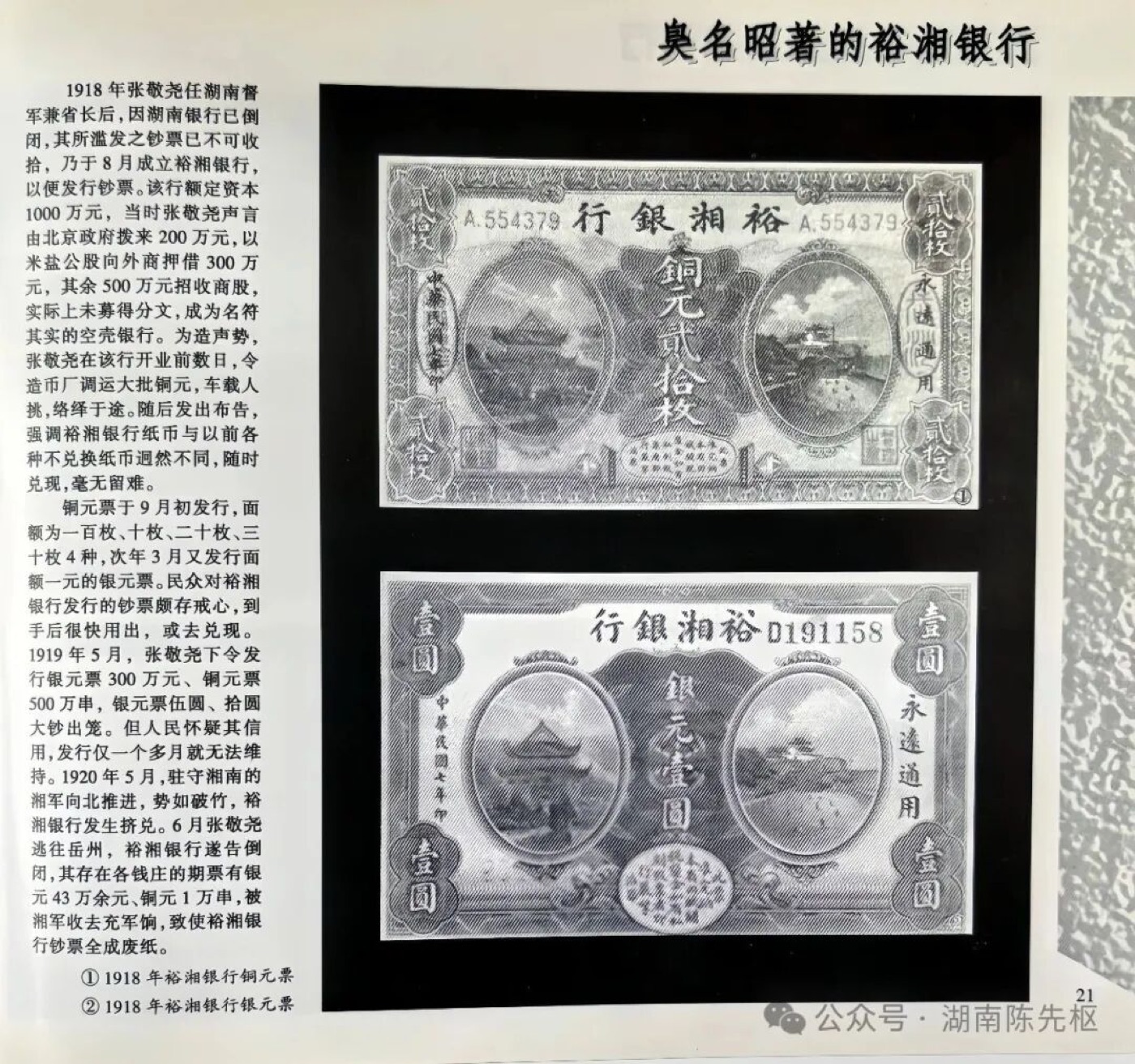
Then came the warlord. In 1918, Zhang Jingyao took office as Hunan's military governor with the earlier Hunan Bank already collapsed and its over-issued notes beyond saving. His solution, that August, was a brand-new bank: Yuxiang Bank, authorized capital of ten million yuan.
Two million, Zhang announced, would come from the Beijing government; three million would be borrowed abroad against public shares in rice and salt; the remaining five million would be raised from merchants. In fact not a single cent of merchant capital was ever subscribed — a shell bank in the fullest sense. For atmosphere, days before the opening Zhang ordered the mint to cart vast loads of copper coins through the streets, by vehicle and by shoulder-pole, in an endless parade. A proclamation assured the public that Yuxiang notes were utterly unlike all previous unredeemable paper: redeemable any time, without the slightest obstruction.
The public was not persuaded. Notes were spent or cashed out as fast as hands could move. In May 1919 Zhang issued three million silver-dollar notes and five million strings of copper notes — including five- and ten-dollar bills — and within barely a month they could no longer be sustained. In May 1920, Hunanese forces swept north from the south of the province and a bankrun hit Yuxiang. By June Zhang had fled to Yuezhou; the bank collapsed, and the promissory notes it held in various money houses — over 430,000 silver dollars and 10,000 strings of copper coins — were seized by the army as military pay. Every Yuxiang note in circulation became waste paper.
iii. The Hunan Provincial Bank finds its footing
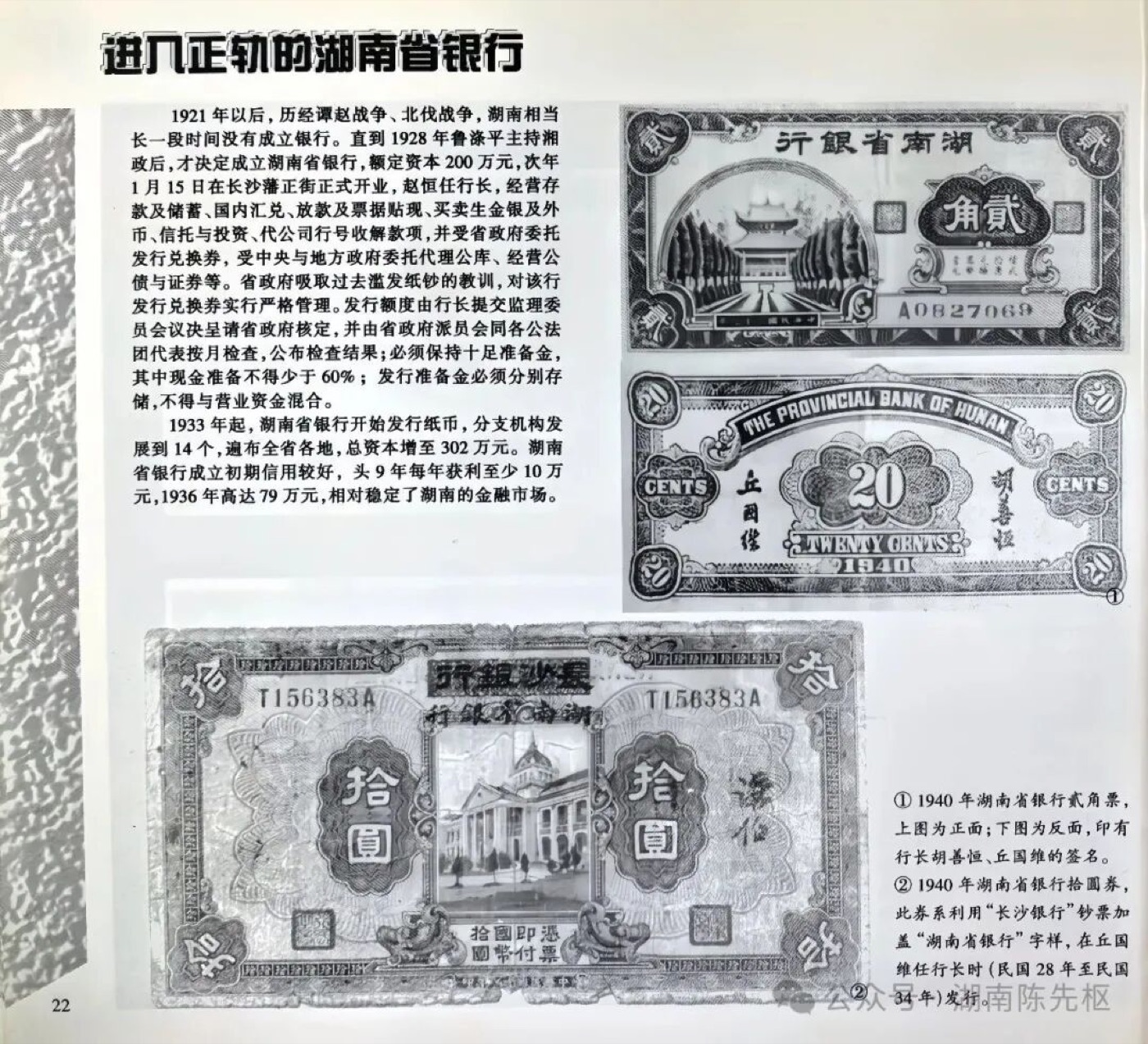
After 1921, through years of warlord campaigns and the Northern Expedition, Hunan went a long while without any bank at all. Not until 1928, under Governor Lu Diping, was the Hunan Provincial Bank established — two million yuan of authorized capital, opening on Fanzheng Street in Changsha on January 15, 1929. It took deposits and savings, handled domestic remittance, discounting, gold, silver and foreign exchange, trust and investment — and, entrusted by the province, issued convertible notes.
This time the lesson had been learned. Issue limits required approval from supervisory committee and provincial government; monthly inspections were conducted jointly with civic organizations and their results published; reserves had to be kept at one hundred percent, with no less than sixty percent in actual cash, stored separately from operating funds.
From 1933 the bank issued paper currency, grew to fourteen branches across the province, and expanded to 3.02 million yuan in capital. In its first nine years it never earned less than 100,000 yuan a year — 790,000 in 1936 alone — and Hunan's financial markets finally enjoyed a measure of stability.
Three banks, three endings: one built a market, one printed itself into oblivion, and one finally learned to keep its promises. The paper is gone; the lesson is still on display.